






By Chris Van Ry, guest columnist for CEoutlook, of AiT
I recently visited a 12-volt retailer that wanted to attract a more upscale, luxury clientele. The shop had already succeeded with mainstream customers, but the owner wanted to move upmarket. Before I took two steps inside, I already knew something felt off.
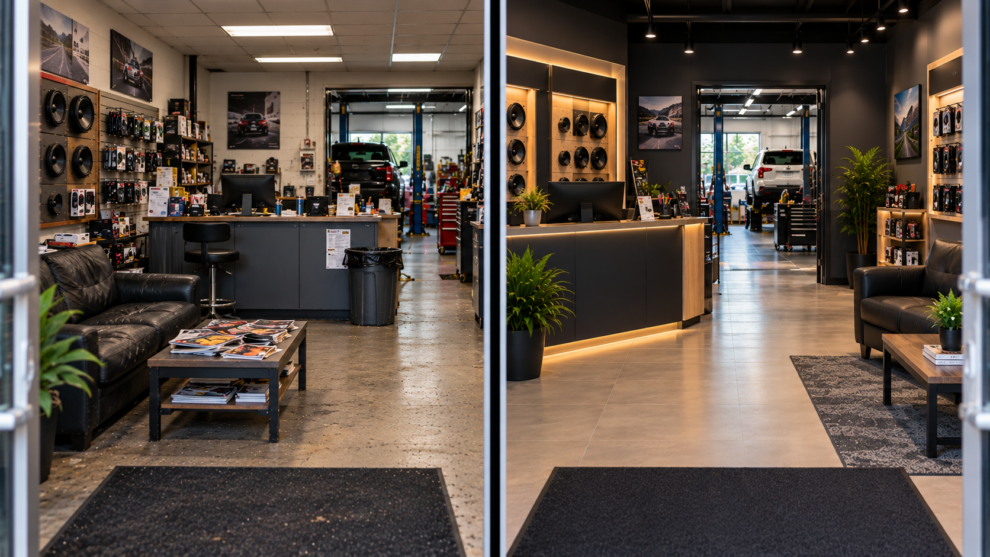
The lounge had a couch and a coffee table covered in torn magazines. Display boards had holes, missing product, and pushed in tweeters. Dust and fingerprints covered the boards and the cluttered sales counter. The install bay had sawdust everywhere, tools piled on benches, and overflowing garbage cans. Music laced with profanity played through the shop, and technicians wore more spray glue than the enclosures they were building.
None of this made it a bad shop. The sales staff were strong and the technicians were skilled. But customers formed an impression before anyone said a word.
This isn’t about marble floors or pretending to be something you’re not. It comes down to one question. Who are you trying to serve?
After visiting retailers across North America, I hear the same complaint in nearly every city. “People around here don’t spend money.” “Everyone wants a discount.” Retailers believe this because their experience backs it up. But their experience only reflects the customers their business currently attracts. Every community that supports dollar stores also supports fine dining and luxury dealers. Both types of customers exist. The people walking through your door usually reflect your business more than your market.
I worked with a specialty dealer surrounded by discount competitors who expected to negotiate on every deal. The owner had hard conversations with customers, held the line on discounts, and learned to sell outcomes instead of products. The result was higher average tickets, better margins, and more profit dollars. The market didn’t change. He did.
Most shops get built around the owner’s preferences. But the customer isn’t you. An SPL enthusiast pitch may not land with an affluent European car owner. The real question is whether you’re building your business around yourself, or around the customer you actually want.
Before a customer speaks to your staff, your business sends signals: the signage, the clean windows, the vehicles in the lot. Inside, staff appearance, display quality, dust, and the music playing. These aren’t signs of luxury. They’re signals of pride and respect. Customers assume you’ll treat their vehicle the way you treat your space.
There are exceptions. Some shops built reputations around outlaw or hot rod culture, and legendary fabricators earned the right to bend the rules on talent alone. But if you’re still building your reputation, why make trust harder to earn than it needs to be?
This was never really about luxury customers. There is no single right customer. Harley Davidson and Honda both succeed. So do McDonald’s and Five Guys. What they share is intentional clarity about who they’re catering to.
Dealers who struggle react to each day as it comes, fighting discount expectations without a strategy. Dealers who thrive defend their standards, curate their displays, and design the customer experience on purpose.
Our industry has more work to do here. Many of us turned a hobby into a business. Passion got us started, but we haven’t invested in ourselves as business people the way we’ve invested in technical skills. If we want to be taken seriously, we need to hold ourselves to professional standards.
I had my own wake up call years ago. Our shop ran full bays with happy customers, and I believed OEM systems were garbage compared to what we built. But as I studied OEM audio engineering and the constraints those engineers worked within, what I once saw as a compromise, I began to understand as engineering. Expertise isn’t having every answer. It’s staying curious enough to keep asking better questions.
If you want to change your business, start by defining your ideal customer. Who are they? What do they drive? Where do they shop? What do they value? What other products and experiences do they spend their money on? What do they expect from a business like yours? Then walk through your business as them. Would they feel instantly welcome?
Before you blame your market for not having the customers you want, ask yourself one question. Would your ideal customer feel like they instantly belong if they walked through your door tomorrow? If yes, keep building. If no, you may have just found the biggest opportunity your business has ever had.
If you would like to write a guest post for CEoutlook, please reach out directly to [email protected]. We welcome submissions that genuinely add value to the industry. Promotional pieces will not be considered. If your piece needs some work, we are happy to collaborate with you to help get your voice heard.
Get the news before your competitors do. CEoutlook is the daily brief read by over 6,500 dealers, reps and manufacturers across the mobile electronics industry. Subscribe free.


Great article…. No one NEEDS what we sell … we have to make them WANT it. Wants are created through our senses…
LOOK good – no holes or missing ceiling tiles price your products. SOUND good with neutral customer appropriate music playing…. TOUCH – can they interact with your working products on display ? And to really catch them off guard burn a nice candle.
I fresh coat of paint and some fresh trunk liner on shop work benches can make a huge difference on how customers see you and how your team feels about their own work area.
The message definitely hits home, Chris. I had a dealer once ask me if everyone was dead, or if it was just him. I explained that there were shops that weren’t just surviving, but excelling. He asked what they were doing that he wasn’t. I looked at him and asked if he REALLY wanted to know. He looked surprised. Of course! So we walked with him to the front of his store, where there were cigarette butts littered outside the front door where his staff discarded them when they were finished smoking. At the install bay, where the floor looked like ice cream sprinkles from the wire stripping. The overflowing trash cans. The signage in the showroom from brands that went out of business 3 years ago, but were never taken down. Displays that probably hadn’t been used in over a year. Open boxed speakers laying around on floor stacks with broken Styrofoam pieces scattered. We finally walked to the windows facing the street. It was about the middle of September. He still had Christmas signage painted on the window from last year. He sheepishly replied “We’re promoting early?”.
People see this. They judge accordingly. Ask yourself honestly; If you were a customer (or wanted to send your mother into a shop), would you go to your own shop based on what it looks like?
Great article, totally accurate, only one chance for first impression.
Good article, spot on. So many small business owners are in business in spite of themselves. They are so tactically involved in the business, seeing it day in and day out through their own eyes that they don’t take the strategic opportunity to walk into the business in a customer’s shoes and experience what they experience.
Well said and well written, Chris. Very eloquent, as always!
Excellent write up. I used to work for a truck accessory/car audio shop and our competitor which sold the more high end brands and had a specialty retail business with high end home products was perceived as more expensive. Their sales people wore ties (yes….and this was in the 90’s) so that was the perception.
2 years into my car audio career and I became an installer there and the first time I saw their labor rates and product prices I was floored because they were no more expensive then us outside of just having brands that had some higher price points. And guess what, they attracted lawyers, business owners, doctors and more. They attracted the clientele they wanted. And guess what, the kids that wanted the wall of bass shopped there to.
Great article, Chris.