






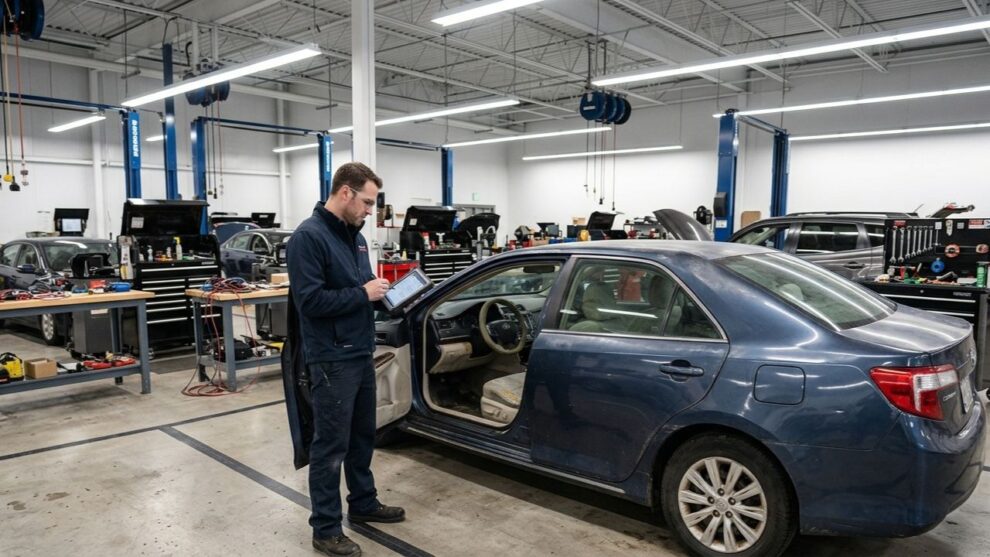
The average vehicle on the road today is nearly thirteen years old. For 12-volt installers, that math creates a real business question.
Dealerships Are Already Drawing Lines.
Mercedes Benz dealers generally cannot order parts for vehicles that were not originally imported to the United States, and Mercedes is largely responsible for the so called “twenty five year” rule that restricts classic imports in the first place. BMW dealers face similar limits. Some genuinely cater to classic models through BMW Classic, but many are more aligned toward warranty work on newer cars and will quietly discourage older jobs. Domestic brands are not far behind.
Chevrolet owners have documented dealers flatly declining service on vehicles around ten years old, with GM corporate reportedly unwilling to use its leverage to require dealers to keep supporting older products. Ford dealers have drawn similar lines, with some refusing to even look up a part for anything past ten years or 200,000 miles. Notably, Ford reversed course publicly this year, launching a campaign recommitting to servicing older vehicles through its Motorcraft parts program, aimed squarely at owners who keep a car thirteen to fifteen years. The industry doesn’t agree on this question, which is exactly why 12-volt shops should think it through deliberately rather than end up with a policy by accident.
The Liability Problem, A Real World Example.
Picture a routine job. A customer brings in an older vehicle for a new speaker installation. But the door panel clips, brittle after two or three decades of heat and cold cycling, snap during removal. That is not a workmanship failure. This is normal wear and tear, the vehicle’s own materials are simply getting old and brittle, not something caused by the installation itself. General repair shops have already built a solution for this that 12-volt shops can borrow, a signed work order disclaimer stating the shop assumes no liability for damage to worn or aged components. It puts the risk on the table before the work starts, so the customer shares in that risk instead of the shop absorbing it entirely after the fact.
The Skills Gap Nobody Talks About.
Age is not only a parts and plastic problem. It is also a skills problem. A sixty year old vehicle might still be running a carburetor, and plenty of installers working today have never rebuilt one or even seen one apart. The same applies to older dual shaft and twin shaft mechanical setups that a lot of current technicians have simply never trained on. Before taking on a genuinely vintage job, a shop owner needs to ask a harder question than whether the car is welcome. Does anyone on staff actually know how to do this work?
The Recommendation.
A flat age cutoff protects a shop from disputes and parts headaches, but it also turns away a large and growing pool of older vehicle owners, exactly the customers spending money to keep their cars useful and enjoyable. A tiered approach makes more sense for most 12-volt shops, disclosure and waivers to cover aging trim and parts risk, paired with an honest skills assessment before agreeing to anything. Below in the source section, we linked the Auto Station’s disclaimer for older vehicles, Auto Station is a automotive repair center out of Englewood/Sheridan, CO.
Sources
- Hagerty Media, Should You Take Your Vintage Car to a Dealership for Service.
- Traverse Forum, Chevrolet Declining to Service 10 Year Old Vehicles.
- Bob Is The Oil Guy Forums, Dealership Chain Won’t Do Anything If Over 10yr slash 200k.
- Ford, Your Car Is Probably Older Than You Think, Ford Is Ready For The Long Haul.
- Santa Clarita Auto Sound, 3 Warning Signs of a Bad Car Audio Installation and What To Do About It.
- The Auto Station, RO Disclaimer.
Get the news before your competitors do. CEoutlook is the daily brief read by over 6,500 dealers, reps and manufacturers across the mobile electronics industry. Subscribe free.



I think it’s time for an article regarding disclaimers in general. I’d love to see how shops handle what seems to be an increase in issues beyond our control. Vehicles that we work on and have no problems for years, then a dealer firmware update and now incompatibility with our products and the vehicle accepting updates. Also not a fault of our vendors as everything was correct and current at the time of the original installation. Dash plastics, dash light bulbs that would still be working had we not removed them / slightly jarred them around during say a head unit replacement. Nothing that we did negligible, just old parts. Aftermarket electronics from reputable companies that fail in say, three months or that don’t work as advertised from day one requiring additional labor that we can’t charge the company for. I get it, in the customer’s eyes, if we sell it / if we’re an authorized dealer for said product then we should be responsible for it.
Our ideal disclaimer would be as short as possible basically saying we’ll address anything that occurred due to a mistake in our process but we can’t be responsible for anything that is beyond our control. We always have a “work with us and we’ll work with you” kind of method of dealing with problems. We are very successful at coming up with a solution with our customer’s, of course at our expense of time and money. Bottom line, car’s are getting more complicated, more connected, ota updates, require more specialized tools and equipment, more training and more labor hours. In 1993 we were charging about $65 for a head unit install, now $450 labor is not unusual.
This is a great topic. Older BMW, Mercedes, and Porsche, as an example, can be great to work on because there were less computers and product quality was higher.
On the other hand, a 30yr old Hyundai or Kia would not be the same in our shop. Those vehicles would likely be in poor condition.
And, how the vehicle was maintained, stored, mileage etc all play into it for us.
Vintage vehicles suppy some of our largest work orders. with the most profit. We focus on being best in class for classics, and under promise, over deliver. Fifteen to twenty year old vehicles are a different story, but bring much more volume to our bays than new vehicles do.
For Classic Car Audio Upgrades – we have “THE TALK” with the customer first. For Remote Starters – we explain that Our Insurance Company does not allow us to work on cars over 25 years old. This reminds customers we ARE insured, professional, and serious – and makes the Insurance company the BAD GUY.
Does your insurance company truly limit coverage to 25 years, or are you not being honest with your customers? Seems not being able to work on anything earlier than 2001 would limit your sales. Maybe your market is different. Not trying to be rude, but if a shop told me that, I would say to myself “BS” and most likely not return.
With people keeping cars much longer because few can afford a new vehicle, I say adapt. The disclaimer form is a good idea. Turning away business is not. This trend of keeping vehicles longer is only going to continue.