






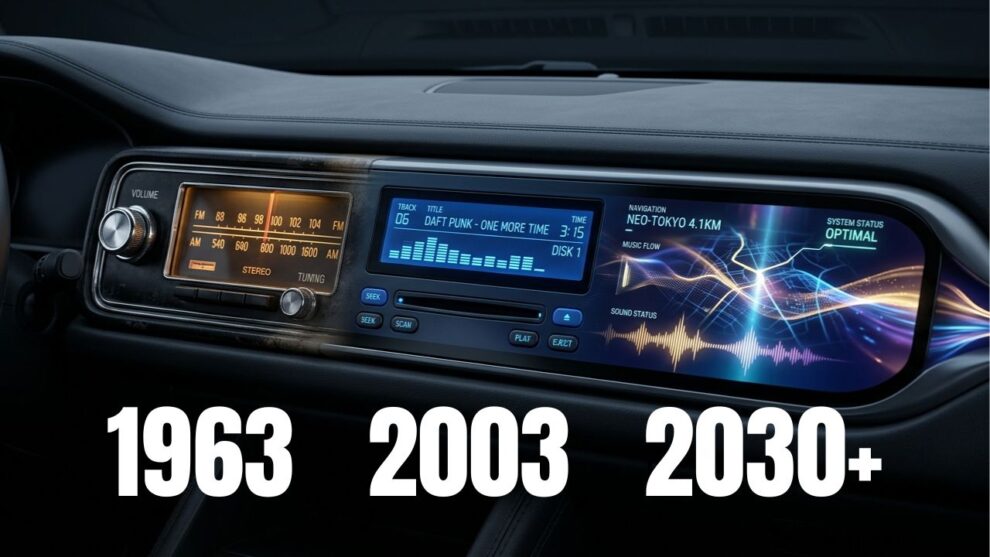
Apple CarPlay and Android Auto changed the car audio industry more than any other advancement in the last twelve years. Both platforms showed consumers that their phone can be added or integrated into the dashboard, not mounted beside it. This expectation now shapes almost every purchase decision at every price point.
With the launch of CarPlay on March 3rd, 2014, and Android Auto’s launch on March 9th, 2015, these platforms have seemed to plateau. Both platforms move slowly when it comes to adding new apps or features. Apple’s own upcoming iOS 27 update will finally allow CarPlay to stream video, a capability Android based and Linux based head units have offered for years. Consumers have wanted these features for a long time. Consumers are now looking elsewhere than the normal large manufacturers for these types of features.
Head units have quietly added premium features. Time alignment and various forms of advanced digital signal processing are now common. Multiple sets of preamp outputs are standard on many models, no longer a premium feature. Wallpaper and color customization exist across nearly every price point.
So what is the next evolution?
The next step is not visual customization options. It is opening the head unit to apps that manage everyday life, not just entertainment. Some examples of these apps include:
- building security access for gates
- Ring doorbell App
- power liftgate operation
- tonneau cover operation
- RGB lighting control
- third party tuning apps that adjust shift points and timing for towing and off-road use
These are the kinds of integrations Android and Linux based platforms already support because their app ecosystems are open, unlike CarPlay and Android Auto.
Android runs the same operating system found on phones, so it can install apps directly from an app store. Linux based systems run a custom operating system the manufacturer builds and controls, which is powerful but closed off to outside developers unless the manufacturer chooses to add something.
None of the major car manufacturers sell an Android based head unit in North America. That is not because the technology or manufacturing restrictions. Alpine already sells an Android based unit in the United Kingdom, the Alpine INE-W409S. One of the largest suppliers in the world are already proving out this technology, just not here yet.
When will North America catch up. SEMA this year may offer a clue.
What do you think the head unit of 2030 will look like. Leave a comment below.


