





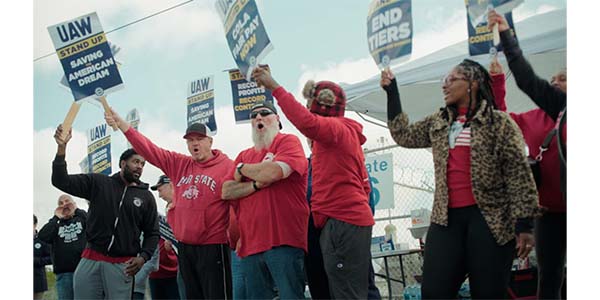
A key impact of the UAW auto workers strike from a 12 volter’s point of view is a possible shortage of new cars if the strike lasts another three to six weeks.
In that event, expediters overall and dealers who perform a lot of window tinting would likely see a dent in their new car business. However, a secondary impact of the strike on the general economy could come sooner.
Car dealerships are expected to begin raising prices on new cars once the strike, which started September 15, reaches the one-month mark, reported CBS News.
Car shortages are expected at the two month mark as many Ford, General Motors and Stellantis dealerships started the strike with about 60 days of inventory, said reports.
Overall the strike is reducing vehicle output for car companies by about 3,200 per day said S&P Global Mobility, according to Business Insider.
Car shortages are not necessarily bad for the aftermarket. Dan Bowman of Titan Motoring, TN, a leading expediter, said auto dealerships tend to turn to used cars for inventory during shortages, which provides a boost to expeditor sales. “If they have a client interested in a car missing a feature, we can be that first phone call to add that feature. It can be as simple as a backup camera or leather or just adding heated seats.”
Bowman added, “During the pandemic, we had one dealer we did a little over $150K with in used cars, just at the tail end of the pandemic.” He noted, “If they go to pre-owned, it’s great for me.”
Dave Wall of 7-store chain Freeman’s Car Stereo, NC said the chain is so diversified that any business lost in expediter business is made up through consumers upgrading cars that they are holding onto longer.
The greater impact of a strike Wall and other said may be in the disruption to the economy.
“The bigger impact has more to do with all the money that gets put into the economy from that industry from top to bottom–part suppliers, dealerships and their employees,…” Wall said.
Scott Fricker of American Radio, GA said he’s watching the strike closely. And he agreed it “would be great for the used car market, which will be good for everybody.” But he also said that a strike is a drag on the economy “and we already have enough issues with inflation and high interest rates…Hopefully they will come to terms quickly.”
The impact is particularly true in Detroit, the home of Ford, GM and Stellantis. Mark Constantakis of Car Tunes Stereo of Detroit said, “Since they started reporting on the negotiations, business started to slow. As soon as they struck at all three targeted plants, business literally slowed down big time. A lot of our customers are UAW members.” He too, is hoping for a quick resolution.
The three plants affected by the strike produce vehicles including GM pickups, Ford Broncos and Ranger pickup trucks and Jeep Wranglers and Gladiator pickups. On Friday, the UAW widened the strike to 38 additional GM and Stellantis parts distribution centers.
The UAW did not add more Ford distribution centers to the strike as talks with Ford are progressing.
Additionally, Canadian autoworkers reached an agreement Sunday to avert a strike.
Photo credit: UAW
Get the news before your competitors do. CEoutlook is the daily brief read by over 6,500 dealers, reps and manufacturers across the mobile electronics industry. Subscribe free.


