






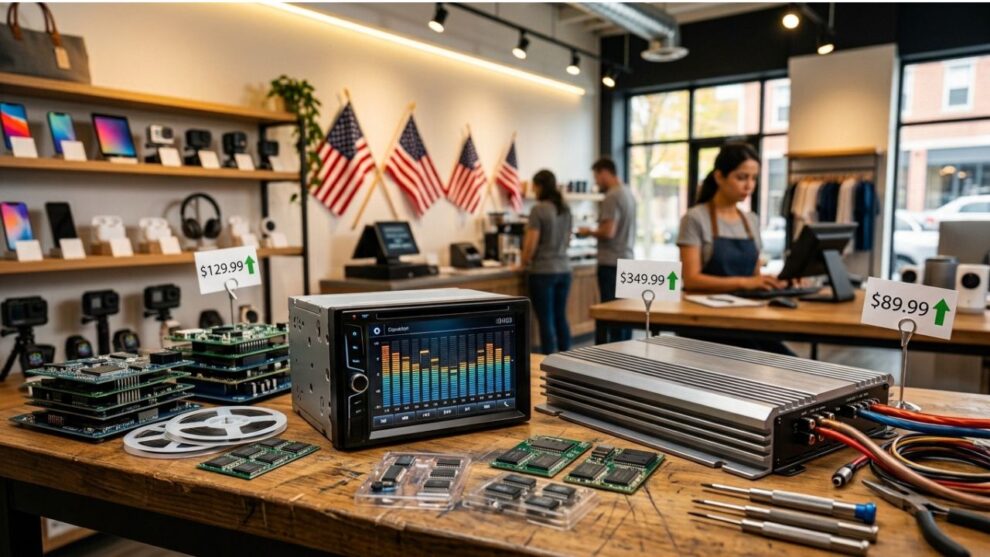
Many suppliers announced price increases on September 1 or in the preceding weeks.
Given the skyrocketing cost of memory and raw materials, there has been speculation for months that suppliers would boost prices in the second half, but the price hikes were minor, with some in the low single digit percentage increases, said dealers.
Suppliers appear reluctant to pass along higher material costs due to belt tightening by consumers who are saddled with higher gas prices and overall inflation, said dealers.
Vendors raising prices include Alpine and Firstech, as confirmed by the companies and Kenwood, Pioneer, and Focal, as noted by multiple dealers or industry members. Many issued corresponding MAP price hikes so that retailers are not caught in a squeeze, said retailers.
Head merchants at two leading retail chains said they are able to easily handle the increases and called them “reasonable” given the rising cost of raw material, and memory chips.
“I think the public will generally be willing to pay the difference, and by and large, the manufacturers are maintaining margins for the dealers…We can’t expect the manufacturers to keep absorbing the increases in their costs,” said a buyer at one car audio chain.
A prominent manufacturer’s rep said suppliers understand that “Everyone is pretty price sensitive at the moment. No one likes paying more at the gas pump.”
Additionally, some vendors have received tariff refunds which allowed them to absorb some of the raw material increases, said industry members.
As we reported earlier this year, chip shortages and price hikes are due to the large amount of memory needed by AI data centers. Companies such as NVIDIA and Samsung are switching their production to high bandwidth memory called HBM required by AI servers, leaving less production available for traditional DDR memory used in consumer electronics.
Pricing on DRAM used in car radios has gone up by 30 percent this year said Ronnie Brashear of Epsilon. All car audio brands are facing the same kind of increase, he said. Brashear added that prices are volatile. A production run of its Soundstream V2 might be $50 higher or lower per unit at any given time. Sometimes there’s an upcharge at the end of a production run because pricing changed midstream. Epsilon raised its radio prices by $50 each about 6 to 8 weeks ago, it said.
Epsilon was told by its factory that demand for AI’s HRM chips should cool by mid-2027 so pricing on DRAM would stabilize as a result.
Also, as reported earlier, the price of SD cards has also skyrocketed causing price hikes by some dashcam suppliers in July.
Get the news before your competitors do. CEoutlook is the daily brief read by over 6,500 dealers, reps and manufacturers across the mobile electronics industry. Subscribe free.


