






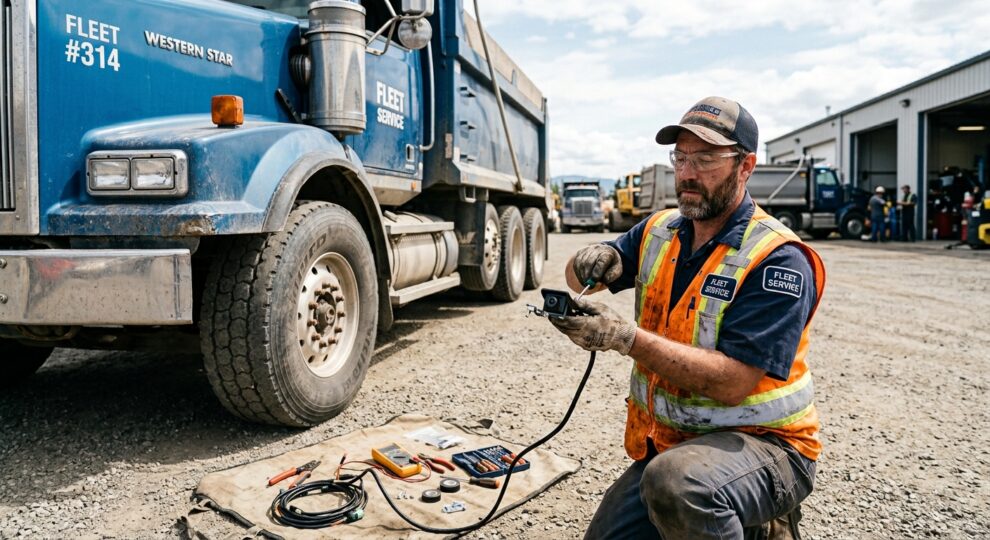
Car audio shop Automotive Specialty Systems, CT, entered the fleet market in 2015 and it’s now 90 percent of its business.
It took on fleet work about four years after it began selling car audio, after being contacted by a broker for a fleet safety equipment supplier that was seeking installation subcontractors.
Fleet work used to be strictly GPS tracking. At this point, every fleet has a tracker and the market has moved to AI-driven safety cameras, either a windshield camera that monitors your driver’s performance (following distance, lane changing) or a camera monitoring driver behavior (are they on the phone or sleeping), said David Eichorn, COO of Automotive Specialty Systems.
“In the last five years, that’s been the trend. Now the page is starting to turn again and now it’s on 360 solutions. Not just the windshield, but cameras outside on fenders looking down the sides into the blindspots and in the rear for rear end collisions,” said Eichorn.
“There are also more specialized solutions. We get a lot of petroleum customers that want cameras on the trailer looking at the valves on the trailers” so they can see the delivery in action. “They are looking for safety compliance. Multi-camera is the next great frontier. It’s already getting pretty crazy. The challenge is, it requires a lot of skill. We’re in a position where we just don’t have enough technicians in the field to keep up.”
In comparing it to a retail environment, “say, remote start, there’s a massive amount of documentation in place to support that type of work. A technician doing one of these 360 camera installs doesn’t have that. He has to figure out how the truck comes apart and how to run the wires. There’s no database. You need to break out the meter and figure it out fast enough that you still make a profit on the deal.” “It’s a combination of the skills required and the fact that you’re not working in an air conditioned shop, but working outside. And it’s travel, so it’s tough,” Eichorn said.
Ideally, you would be hiring 20 year olds for the job who can travel and take the heat, but they are not applying, he said. “So it’s 40 year olds.” He offers them a paid week off for every three weeks of travel.
The shop turned nationwide almost 2 years ago. It’s predominantly focused on the East Coast, but it is now hiring for installers in Texas and Colorado, and it just hired a second tech out of Michigan. The biggest variable cost to control is travel, so it pays to have installers in different parts of the country, Eichorn said.
“We’ve done so much, we’ve become a larger player ourselves. We’re desperately trying to grow but we can’t find technicians.”
Automotive Specialty Systems employs ten installers and it’s trying to hire six more. “We’ll take someone who has worked in a car stereo shop for 5 years and never touched fleet work. If they are willing to travel, we’ll train them in-house. We have an escalator program to help get them up to speed.”
He noted, some car audio installers without fleet experience will put up a website and get their name out on Facebook claiming to be a commercial vehicle installer. “You may get contacted and try your best. Anyone with a tool bag and a high visibility site can say they are an installer. There’s no state licensing. Some say they can do whatever job they’re sent but then they screw up and leave after they are paid,” Eichorn said.
Is he glad the shop made the switch to fleets? “Absolutely glad. The Northeast, other than remote starters, is a tough market space for traditional car audio. There are quite a few really good shops in a really small market space, so being able to grow and compete is quite difficult. This proved to be a brand differentiator for us. Fleet or B2B work is quite a bit more profitable. If we compare an average hour of productivity in the shop on a traditional retail car stereo product vs a fleet install, we tend to average about 1.5x on fleet work.”
Get the news before your competitors do. CEoutlook is the daily brief read by over 6,500 dealers, reps and manufacturers across the mobile electronics industry. Subscribe free.


