





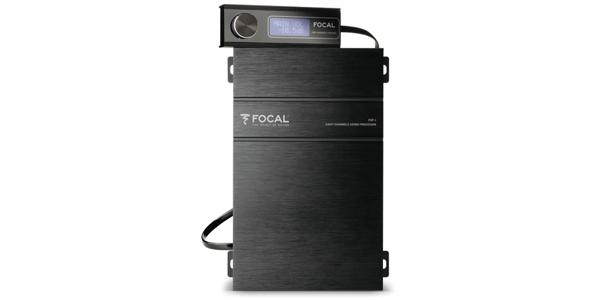
Focal is introducing its first standalone digital signal processor (DSP).
The FSP-8 has 6 inputs and 8 outputs and a TOSLINK digital input for a connection to a digital source
Focal says the unit’s strongpoint is an easy to use user interface that lets you hear any adjustments you make in real time.

The FSP-8 works with a PC and comes with a wired remote for volume, fader, presets and subwoofer volume control.
The TOSLINK input can handle Hi-Res Audio at 24 bit/192kHz.
On the analog input, the FSP-8will take high level or level signals directly
Shipping is expected in March at a street price of $999.

Focal also showed at CES a prototype of its first motorcycle amplifier that is designed for easy installation in any touring bike with a fairing.
The Class D amplifier will have a power rating of 150 watts by 4 RMS. It’s efficient with crossover points more suited to a motorcycle. It will also have an anti-clipping circuit and a coated circuit board for water resistance. About the size of a paperback book, the new amplifier will ship this summer at a street price of $699.
For more information on the new Focal DSP, here are some additional specs:
Maximum output with a 10,000 ohm level load of 3.4 volts
Frequency response of 5Hz to 21KHz +-3dB.
SN radio A weighted is 90dB for the analog input and 99dB for the optical input
Distortion level is .02 percent THD
10 band equalizer for each channel of output
Delay adjust range of 0 to 22 milliseconds per channel in 0.1 millisecond increments
FSP-8 software is compatible with Windows XM, Vista, 7, 8 and 10
The software user interface for the FSP-8 lets you control from the main screen:
- The main output level of the system
- Channel levels for each output channel left and right in .5 db steps
Each individual output channel has the ability to do the following;
- listen to one channel only
- listen to pairs of channels only
- mute one of pair of channels respectively
Summing takes place in the high level part of the program. The user selects which pair of inputs they wish to sum. An example would be to take channels 1-6 inputs and sum them together.
Get the news before your competitors do. CEoutlook is the daily brief read by over 6,500 dealers, reps and manufacturers across the mobile electronics industry. Subscribe free.


